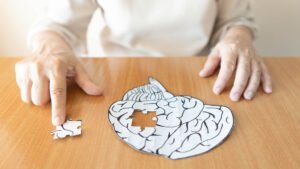
Individuals may lose their mobility and control due to damage to the areas of the brain where some specialized cells involved in movement control are collected and/or due to the insufficiency of the production of substances called neurotransmitters responsible for ensuring this control. The most important surgical method used in the treatment of neurological disorders that cause these damages is the brain pacemaker. Brain pacemaker, one of the adjustable and controllable surgical methods, is especially effective on patients with essential tremor (uncontrolled tremor that occurs during voluntary movements), Parkinson's disease and dystonia (involuntary contraction).
Thanks to the brain battery, the electrodes placed on the patient can be controlled without contacting the patient, and the disease can be taken under control by making adjustments to correct the patient's complaints. Brain pacemaker operations performed using advanced technology carry less risk than other brain and neurosurgery operations. The quality of life of patients who undergo brain stimulation surgery, especially Parkinson's patients, can continue their daily lives normally.
IN WHICH DISEASES IS IT USED?
Brain pacemaker is used to minimize the symptoms of some diseases.
Parkinson's disease,
Epilepsy,
Tremor disorders seen in some parts of the body (Essential Tremor),
Involuntary contraction diseases (Dystonia) seen in some parts of the body,
Tic disorder (Tourette),
Obsessive compulsive disorders,
Major depression.
Studies are being carried out to use brain batteries in the fields of Alzheimer's and obesity, as well as these diseases.
WHAT ARE THE EFFECTS?
After brain stimulation operations, patients can return to their daily lives very quickly. Especially the daily lives of Parkinson's patients and patients experiencing involuntary contractions change depending on these symptoms. Reasons such as tremors and excessive muscle contraction cause patients to be unable to control their movements. Thanks to a brain battery, patients suffering from these symptoms return to the initial stages of their disease. While the majority of patients who undergo brain stimulation surgery reduce their medication doses, some stop taking the medications they use completely.
Although brain stimulation is effective on symptoms, it does not completely eliminate the disease. Most neurological diseases occur due to damage to certain parts of the brain. Brain stimulation does not restore these damaged areas to their normal state, but it is effective in relieving symptoms such as tremors, inability to control movement, and slowness of movements in the patient, which develop due to the dysfunction of this region.
Especially in Parkinson's patients, these symptoms are minimized thanks to a brain pacemaker. Individuals who are in the 10th year of the disease and have advanced Parkinson's disease can return to the first stage of the disease after brain stimulation operations. Patients who are unable to perform daily tasks such as buttoning a shirt, preparing food or tying their shoes and who are disconnected from social life can continue their daily lives without needing help.
HOW IS BRAIN STABILIZER SURGERY PERFORMED?
The purpose of brain stimulation applications is to provide electrical stimulation at regular intervals to parts of the brain that are damaged and whose electrical activity is impaired. For this purpose, it is first necessary to map the patients' brains. MRI and other imaging methods are used for the map. Then, taking this map into consideration, the areas where the electrodes should be placed are determined and thin cables that will provide electrical activity are placed in these determined areas. The battery that will give the electrical stimulation is placed under the collarbone or in the chest cavity.
Although the general outlines of brain stimulation surgery are as follows, a number of procedures are performed before, during and after the surgery.
BEFORE SURGERY
Various tests and examinations are performed on patients to determine their condition before surgery. MRI and brain tomography are imaging methods used to create brain maps of patients. In addition, some tests are performed to determine the suitability of patients for anesthesia.
Blood tests and urine tests are performed to learn the general condition of the patient. Checks are performed to indicate general health status, such as blood count, hormone status, and kidney functions. In this way, it is understood whether the patients are ready for surgery or not. Apart from these tests, other tests deemed appropriate by physicians are also applied.
Brain stimulation surgeries affect patients not only physically but also psychologically. For this reason, psychiatric interviews are held for patients deemed appropriate by physicians, thus providing relief to the patients.
After listening to the patient's medical history, learning about the medications used, and these examinations and tests, the patient is ready for surgery.
OPERATION
Brain stimulation surgeries can be performed while the patient is awake or under anesthesia. This is determined according to the patient's disease and physician preference. In surgeries performed while the patient is awake, surgeons make a small hole in the area where local anesthesia is applied and electrodes are placed in the areas determined on the brain map. Although the patients are conscious during this procedure and the adjustment of the electrodes, there is no pain or sensation of pain. Batteries are placed under the skin of patients, usually in the rib cage. Therefore, general anesthesia is applied to patients so that they do not feel any pain during the operation.
In surgery performed by putting the patient to sleep under anesthesia, the patient is first put to sleep. Then, the electrodes are placed in the targeted area and then the battery placement is performed in the same session.
Brain stimulation surgeries are among the safest brain operations. Although surgery times vary from patient to patient, the average is between 2-5 hours.
POSTOPERATIVE
On the first day after brain stimulation surgery, patients must be in the hospital due to the possibility of some complications. It is normal for patients to experience pain in the head area after surgery. Along with pain, dizziness is also a common effect. If this temporary pain and dizziness is abnormally severe, medical intervention is required.
Although brain stimulation surgeries are one of the most risk-free surgeries, it is possible to experience some complications and side effects, as in every surgery. Vascular occlusions, infections, bleeding, visual disturbances, loss of balance and nerve damage are some of the complications that may occur.
WHAT ARE THE RISKS OF BRAIN STABILIZER SURGERY?
Brain pacemaker operations carry less risk than other surgeries performed in the field of brain and neurosurgery. However, it has some risk factors that are likely to occur in every surgery. Research shows that the serious complications seen in brain stimulation operations are around 2-3% on average. Compared to these serious complications, minor complications are seen in approximately 10% of patients.
Some complications that may occur during and after brain stimulation surgery are:
brain hemorrhages,
wound problems,
Loss of vision,
Shifts seen in brain electrodes,
infection problems,
Contact disorders.
Frequently Asked Questions
DOES BRAIN STABILIZER AFFECT DAILY LIFE?
Brain pacemakers, which are used to eliminate the symptoms of some diseases, do not affect daily life. Those with a brain battery can continue their daily lives like healthy individuals.
HOW LONG CAN BRAIN STABILIZER BE USED?
The brain battery, which has a similar function to the battery, also has a useful life. The lifespan of brain batteries used for different diseases also varies. Brain pacemakers applied to Parkinson's patients are generally used for 3-5 years. In patients with dystonia, the battery life is shorter due to application differences. Rechargeable brain batteries can be used for more than 5 years. The projected lifespan of these batteries is approximately 15 years.
Can patients with brain pacemaker implantation engage in physical activity?
Yes. Patients with a brain battery can perform all kinds of physical activities like healthy individuals. They can engage in physical activities such as exercising regularly, swimming, and participating in sports activities such as football and tennis. However, it is necessary to avoid extreme sports and driving to avoid head trauma due to accidents.
WHO IS BRAIN STABILIZER NOT SUITABLE FOR?
Patients who will undergo brain stimulation must meet certain criteria. In early stage Parkinson's patients who respond to drug treatment, using a brain stimulator is not a preferred method, especially in the first 5 years. Brain stimulation is not performed on patients with moderate to severe dementia, patients with severe depressive episodes, and patients who have an obstacle to anesthesia.
CAN INFECTION OCCUR AFTER BRAIN STABILIZER APPLICATION?
Most of the studies indicate that there is a 3% rate of infection after brain stimulation applications. Most of these infection cases are seen in the chest area where the power supply is placed.
CAN PATIENTS WITH BRAIN STABILIZER BENEFIT FROM RADIOLOGICAL IMAGING?
MRI, tomography and brain imaging methods and X-Ray devices do not affect patients with brain pacemakers. However, body imaging with an MRI device is not recommended for these patients.
CAN NON-RECHARGEABLE BRAIN BATTERIES BE REUSED LATER?
Although this may vary depending on the model of rechargeable brain batteries, it is possible to recharge most rechargeable models after they are turned off.
HOW LONG DOES IT TAKE FOR PATIENTS TO RECOVER AFTER BRAIN STABILIZER SURGERY?
The average recovery time for patients after surgery is 1 month. This 1 month includes the first few days when the patient is under observation and the 10-14 days until the dressing and stitches are removed. In case of complications such as side effects not subsiding, this period may be even longer.
DO BRAIN STABILIZER SURGERY COMPLETELY CURE THE RELATED DISEASE?
No. Brain stimulation is applied to minimize symptoms in diseases such as Parkinson's and dystonia, where involuntary behaviors are shown. The absence of symptoms such as tremor is due to the use of a brain stimulator. In this sense, patients show the same symptoms when the battery is not used.
This information is educational and does not replace consultation with a physician.