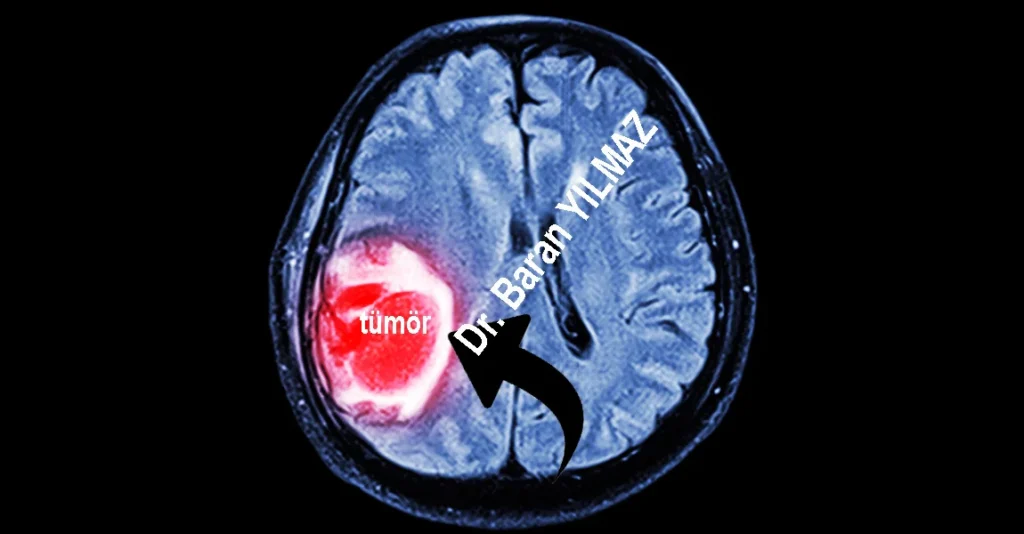
Brain and spine tumors are increasingly observed in parallel with the increase in other types of cancer. Screening and early diagnosis, which are the general principles in the fight against tumors, are also extremely important for brain and spine tumors. Screening tests have been described for many diseases, but screening for brain and spine tumors is not used in practice. Therefore, it is important for patients to consult a doctor in time.
Brain and spine tumors are basically divided into two types. The first of these is “primary tumor”, that is, tumors arising from the tissue itself. Another is "metastasis", which is when cancer that has formed elsewhere in the body spreads to the brain or spine and develops there.
Primary brain and spine tumors can show benign or malignant behavior. Benign masses tend to grow slowly. Malignant ones, on the other hand, grow much faster and their symptoms appear more quickly.
In such a case, the patient's need to consult a physician occurs faster. There are no statistics on the incidence of primary brain tumors in our country.
According to a study conducted in the USA, brain tumors are detected in 200,000 people annually in this country. Brain and spine tumors have a serious place especially in childhood cancers.
CURRENT APPROACHES IN BRAIN AND SPINE TUMOR SURGERY!
According to the classification and regulation of nervous system tumors by the World Health Organization, the molecular and genetic characteristics of tumors are now included in the classification. More than 100 primary tumors are recalled in this classification. When metastases are added here, a significant spectrum emerges. Therefore, it has become a necessity today for the physician to know the different characteristics and treatments of each tumor and apply them to his patient.
The most proven and tested methods, especially after surgery for malignant tumors, are generally recognized methods such as conventional radiotherapy, stereotactic radiotherapy, and chemotherapy. Today, developments in cancer drugs and new information from ongoing research are very promising. Especially in developed hospitals, these advances are put at the service of the medical sector.
Modern understanding aims not only to increase the chance of survival, but also to protect the patient's own organ systems while recovering from the tumor. Surgical treatments, especially for nervous system tumors, require great precision. For this reason, the concept of microsurgery developed in the last quarter of the twentieth century. In the last decade, neurosurgeons have been pursuing methods that will reduce surgical errors to zero.
Today, detailed examination devices used in tumor diagnosis and treatment planning help physicians and patients with almost millimetric precision, both in determining the type of mass and in determining its extent and stage.
Another important area of development is the "Intraoperative MRI" and "navigation" technologies used during surgery. Thanks to these methods, the physician has the opportunity to know how much of the tumor has been removed while the brain tumor surgery is still ongoing. Similarly, operating room ultrasound has been used in many centers today to precisely detect the sensitive structures on the brain or spinal cord and the location of the tumor when starting surgery. Another innovation is tomography and angiography techniques that can be used during surgery. To put it more briefly, in modern hospitals, almost all radiological examinations can now be performed in the operating room.
A method that has become increasingly used in recent years is the monitoring of the nervous system during surgery. This system allows monitoring of nervous system function during surgery. Thus, it has become an important safety measure for surgeons to prevent nerve or brain tissue damage during surgery. A surgical team working in harmony with neuromonitoring will recognize sensitive nerve junctions and will know at what stage damage to the patient's nerve tissue may occur while the patient is under anesthesia, before he or she even wakes up. This method is being developed to prevent the patient from waking up with paralysis after surgery. Significant advances are also being made in radiotherapy methods. In many cases, when the type of tumor is determined, radiation is given only to the tumor tissue without surgery, using methods called "stereotactic radiosurgery". In this way, the tumor is "burned" as it is popularly known. The biggest advantage of this system for the patient is that the patient does not have to undergo a surgical operation. Some spinal tumors can also be destroyed or growth stopped with this method. As an example, if there is no need for surgery in multiple spinal metastases (neck, back, waist), stereotactic radiotherapy is the first treatment option. Undesirable conditions such as pain and paralysis are reduced in this way.
There are always thousands of new medical methods in medical literature and research. However, the biggest responsibility we, as doctors, have is not to apply unproven methods to the patient. The ideal balance can only be achieved by combining modern treatment technologies with basic medical ethics and principles. As a result, patients and physicians still struggle with cancer today, but success is increasing day by day thanks to current approaches and modern techniques.
Wishing you healthy days…
This information is educational and does not replace consultation with a physician.